 English
 French
 German
 Lithuanian
 Polish
 Spanish
If you’ve ever tried meditation and found yourself fidgeting, watching the clock, or feeling more frustrated than calm, you’re not alone. Despite its well-documented benefits, traditional meditation isn’t for everyone—and that’s perfectly okay. The good news is that achieving mindfulness, reducing stress, and finding inner calm don’t require sitting cross-legged in silence for extended periods.
Mental wellness is a deeply personal journey, and there are numerous paths to reach that centered, peaceful state of mind. While mindfulness practices have gained significant popularity in recent years, they extend far beyond formal meditation sessions. In this article, we’ll explore three evidence-based alternatives that can deliver similar benefits through entirely different approaches.
Why not meditation? Understanding common roadblocks
Before diving into alternatives, it’s worth acknowledging why traditional meditation doesn’t resonate with everyone. For many, sitting still and “doing nothing” feels counterproductive or even anxiety-inducing. The mind races, the body fidgets, and what should be relaxing becomes an exercise in frustration.
Common barriers include restlessness (the inability to sit still), racing thoughts that seem impossible to quiet, time constraints in already-packed schedules, and unrealistic expectations about instant results. Some people report feeling more anxious when attempting to meditate, as focusing inward sometimes amplifies rather than relieves stress.
Dr. Patricia Rockman, a mindfulness researcher, acknowledges that “meditation isn’t universally appropriate—some find it uncomfortable or even triggering.” This recognition is important; wellness practices should enhance your life, not add another source of pressure or inadequacy.
The good news is that science shows there are many effective ways to boost clarity and reduce stress. The key lies in finding practices that align with your personality, preferences, and lifestyle—approaches that you’ll actually maintain because they feel rewarding rather than burdensome.
Alternative #1 – Movement-based mindfulness (e.g., walking, yoga, martial arts)
For those who struggle with stillness, movement-based mindfulness offers an ideal solution—using the body to ground the mind. These practices harness natural movement patterns to create a state of present-moment awareness, essentially making the activity itself the focal point rather than trying to “clear the mind.”
Movement mindfulness practices include walking meditation, yoga, tai chi, qigong, and even certain forms of dance.
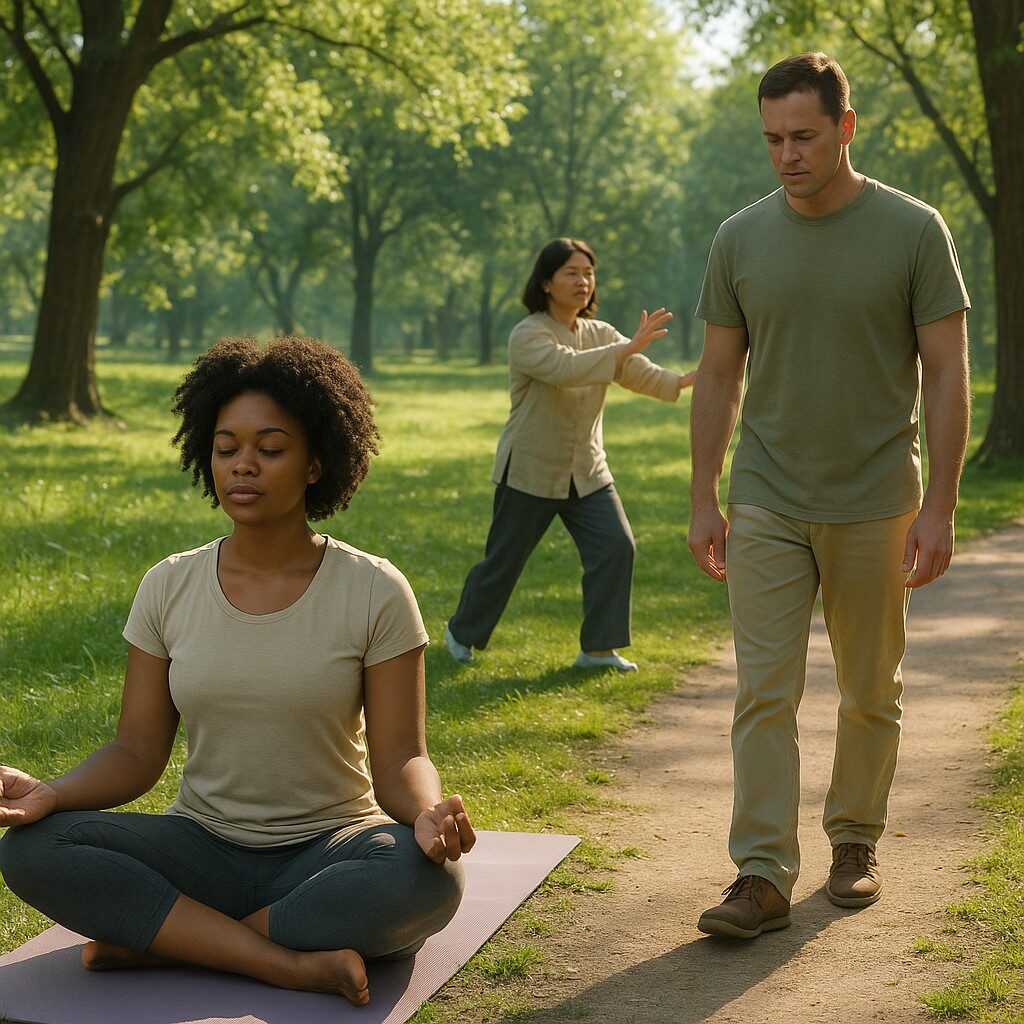
These approaches are particularly effective for people who process emotions and thoughts through physical expression, or who simply feel more comfortable when their bodies are active.
Research published in the Journal of Psychiatric Research indicates that mindful movement practices like tai chi can significantly reduce stress hormones and improve overall mood. Similarly, a Harvard Medical School review found that yoga practitioners experienced measurable reductions in anxiety and improved stress resilience after consistent practice.
What makes these approaches so effective is that they anchor awareness in physical sensations—the feeling of feet against the ground, the stretch of muscles, or the rhythm of coordinated movements—creating a natural gateway to present-moment focus.
Mindful walking: Step-by-step guide
Mindful walking is perhaps the most accessible form of movement meditation. Unlike traditional walking where we often rush from point A to point B, mindful walking transforms this everyday activity into a practice of awareness:
- Choose a quiet space—a park, neighborhood sidewalk, or even a hallway in your home
- Begin by standing still and taking three deep breaths
- Walk at a slower pace than normal—about half your usual speed
- Notice the sensation of your feet meeting the ground with each step
- Feel the shift of weight from heel to toe, the movement of your legs
- When your mind wanders (it will!), gently bring attention back to physical sensations
- Gradually incorporate awareness of your surroundings—sounds, smells, sights
- Practice for just 5-10 minutes initially, extending as comfortable
For those interested in yoga or tai chi, beginner-friendly videos abound online, or consider a single in-person class to learn proper form. The most important aspect isn’t perfection but consistency and presence.
Discover how saunas can enhance your stress-reducing routine and complement these movement practices for deeper relaxation.
Alternative #2 – Task-focused activities (task meditation)
Everyday activities can become powerful opportunities for mindfulness when approached with intention and awareness. This concept, sometimes called “task meditation,” transforms routine chores into restorative mental breaks by bringing full attention to the sensory experience of what you’re doing.
Unlike traditional meditation that asks you to disengage from activity, task-focused mindfulness invites you to engage more deeply with what you’re already doing—whether washing dishes, folding laundry, gardening, or preparing a meal. The goal isn’t to empty your mind but to fill it completely with the present task.
Neuropsychologist Dr. Rick Hanson explains that “when we engage fully in simple activities, we activate the parasympathetic nervous system—our body’s natural relaxation response—while simultaneously training attention and awareness.” This dual benefit makes task meditation particularly effective for stress reduction.
Common household activities that lend themselves beautifully to mindful practice include:
- Dishwashing: Notice the temperature of the water, the sensation of soap bubbles, the weight of each dish, the sounds of water
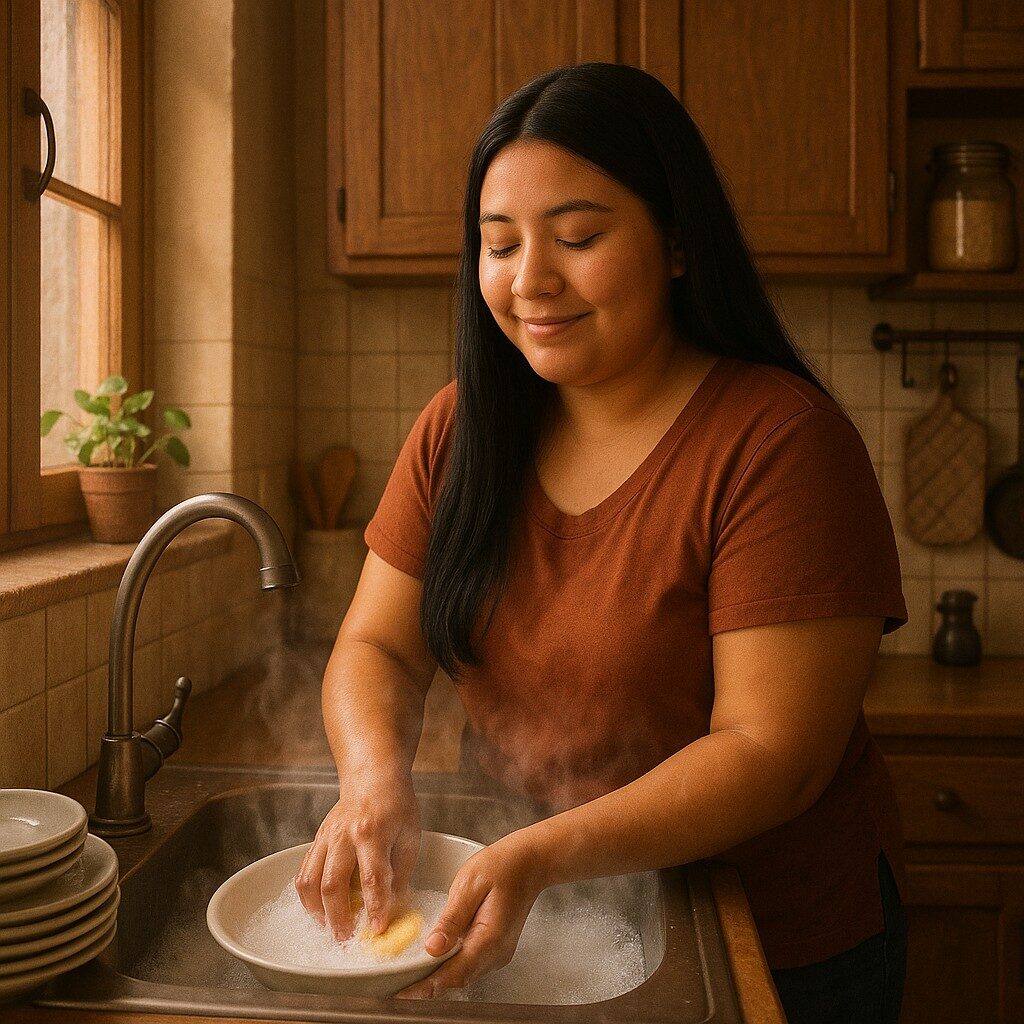
- Cooking: Engage fully with the textures, aromas, colors, and transformations of ingredients
- Showering: Experience the sensations of water temperature, soap texture, and the cleansing process
- Gardening: Feel the soil, observe plant details, notice subtle changes in your garden
- Folding laundry: Pay attention to textures, warmth, and the methodical process of creating order
The key to task meditation is approaching familiar activities with beginner’s mind—as if experiencing them for the first time. When attention drifts (which is natural), gently bring awareness back to sensory experiences: touch, smell, sound, sight, or taste.
Start with just one daily activity, perhaps making your morning coffee or tea. Slow down the process and notice every aspect—the sound of water boiling, the aroma rising from the cup, the changing color as the beverage steeps, the warmth of the mug in your hands. Even this simple five-minute practice can reset your mental state for the day ahead.
Natural energy boosters include taking a nap, exercising, drinking water, breathing exercises, and eating a protein- and fiber-rich snack—adding these mindful habits alongside task-focused awareness can significantly enhance your daily energy levels without requiring formal meditation sessions.
Alternative #3 – Creative flow & awe-inducing experiences
Perhaps the most enjoyable alternative to traditional meditation involves engaging in activities that naturally induce a state of “flow”—that magical condition where you become so absorbed in what you’re doing that time seems to disappear and self-consciousness fades away. Creative pursuits and experiences that evoke a sense of awe can transport us out of rumination and worry, creating natural mental space.
Psychologist Mihaly Csikszentmihalyi, who pioneered research on flow states, found that people report their highest levels of happiness and fulfillment during these periods of complete absorption. Neurologically, flow experiences shift brain activity from the self-critical prefrontal cortex to more intuitive brain regions—similar to what happens during successful meditation.
Creative activities that commonly induce flow include:
- Drawing, painting, or coloring (even adult coloring books)
- Playing musical instruments or singing
- Writing poetry, stories, or journaling
- Dancing or rhythmic movement
- Photography or other visual arts
- Crafting, knitting, woodworking, or pottery
Similarly, experiences that evoke awe—defined as the feeling of being in the presence of something vast that transcends ordinary understanding—have been shown to reduce stress hormones and increase well-being. Research from UC Berkeley found that awe experiences decrease inflammation markers and improve immune function.
Accessible ways to experience awe include:
- Spending time in nature, especially in forests, mountains, or near bodies of water
- Stargazing or watching a sunrise/sunset
- Listening to moving music with full attention
- Visiting art museums or architectural wonders
- Watching films or reading books that inspire wonder
The key distinction between these activities and mere distraction is intention and presence—approaching them not as escapes but as opportunities for full engagement and wonder.
Quick-start flow rituals
Try this 10-minute sketch ritual: Set a timer, choose an ordinary object in your environment, and draw it with complete attention.

Don’t worry about artistic quality—focus instead on really seeing the object, noticing its lines, shadows, and details as if for the first time. When your mind wanders to self-judgment or other thoughts, gently return to pure observation.
For an awe ritual, try this five-minute practice: Step outside and look up at the sky.
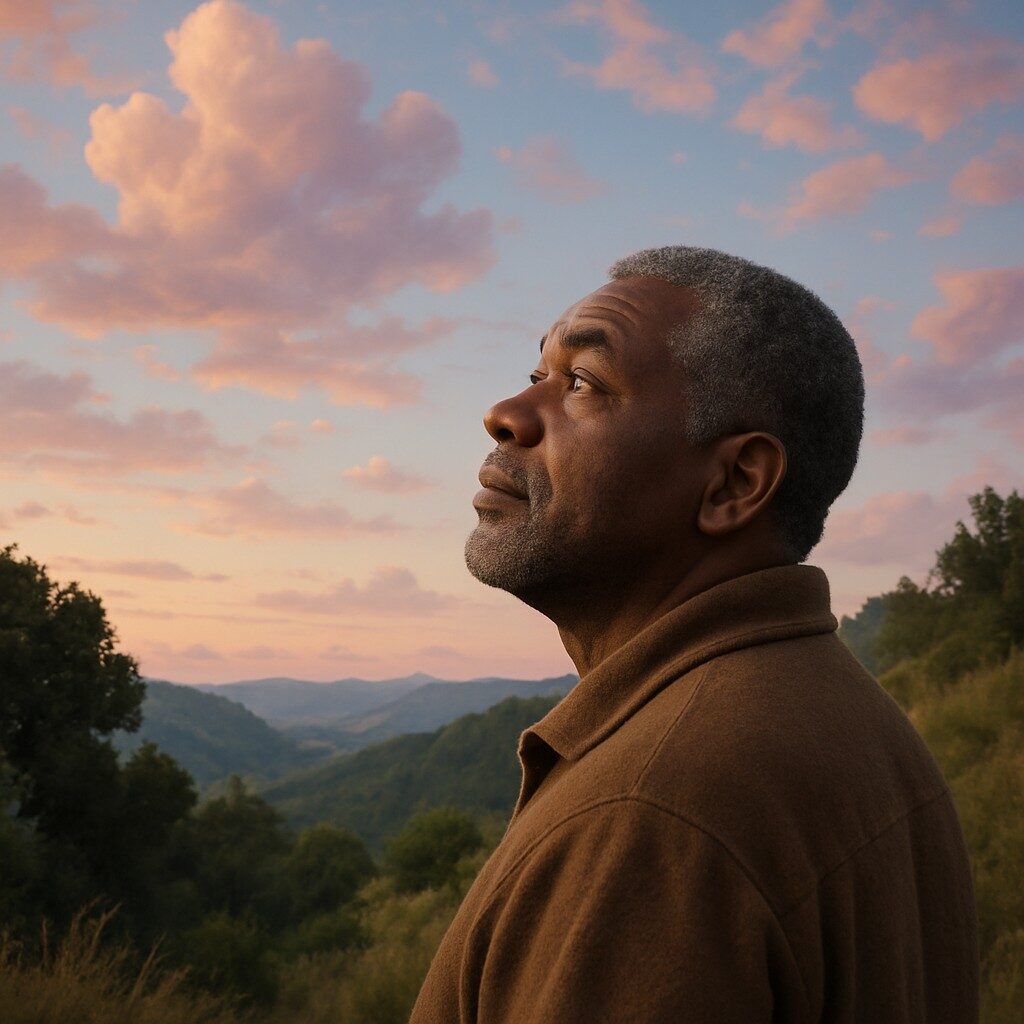
Allow yourself to contemplate its vastness, the distance to the clouds or stars, the ancient light reaching your eyes. Let yourself feel small in a wondrous universe. This brief moment can reset perspective and reduce the weight of daily stressors.
I took a cold plunge every day for a month—here’s what changed illustrates how intentional practices—even challenging ones—can create profound shifts in mental well-being through experiential immersion rather than traditional meditation.
Conclusion
Remember that meditation is just one path among many to mental wellness. The most effective practice isn’t necessarily the one lauded by wellness influencers or ancient traditions—it’s the one you’ll actually maintain because it resonates with your unique personality and preferences.
Whether you find your mindful moments through conscious movement, attentive engagement with daily tasks, or immersion in creative flow and awe-inspiring experiences, what matters most is consistency and presence. Many people discover that combining elements from different approaches creates a personalized wellness routine that sustains them through life’s challenges.
Start small—perhaps with just five minutes daily of mindful walking, attentive dishwashing, or creative expression. Notice how these brief practices affect your overall sense of well-being and gradually expand what works for you.
The ultimate goal isn’t achieving some perfect state of zen-like calm but developing a more compassionate relationship with your own mind and a greater capacity to be present for your life as it unfolds—benefits that are available through many paths beyond traditional meditation.
If you’re looking to further enhance your wellness journey, explore these proven energy boosters that complement mindfulness practices for holistic well-being.
Frequently asked questions
What are the best alternatives to meditation for stress relief?
Some top alternatives include mindful movement (like walking or yoga), focusing fully on everyday tasks, and engaging in creative or awe-inspiring activities. Choose what feels energizing and calming for you.
Can I get the same mental health benefits from mindful activities as from meditation?
Yes! Research shows that mindfulness isn’t limited to seated meditation—many daily activities can foster awareness, reduce stress, and improve well-being when done mindfully.
How do I make everyday tasks feel more mindful and less like chores?
Slow down and engage your senses—notice smells, textures, movements, and sounds. Treat each task as a mini-ritual instead of rushing through it.
What is the "flow state," and how does it help my mental wellness?
Flow is a feeling of deep focus and enjoyment during a creative or meaningful activity. Achieving flow can boost mood, reduce anxiety, and promote a sense of fulfillment—much like meditation.