 English
 French
 German
 Lithuanian
 Polish
 Spanish
Understanding Sauna Ventilation
A truly pleasant sauna experience starts with the ability to “breathe.” Well-designed ventilation is essential for fresh airflow, balanced heat circulation, and overall comfort, not only for the people inside the sauna, but also for the heater itself.
Why proper ventilation matters
When ventilation is poorly planned, oxygen levels inside the sauna drop, making it uncomfortable to sit on the bench for longer periods. At the same time, air stratification occurs: excessive heat builds up near the ceiling, while the lower level, especially around the feet, remains noticeably cooler. Correct ventilation improves air quality, evens out temperature distribution, and allows the heater to operate more efficiently.
Key components of sauna ventilation
A functional sauna ventilation system typically includes:
- Fresh air intake (supply air)
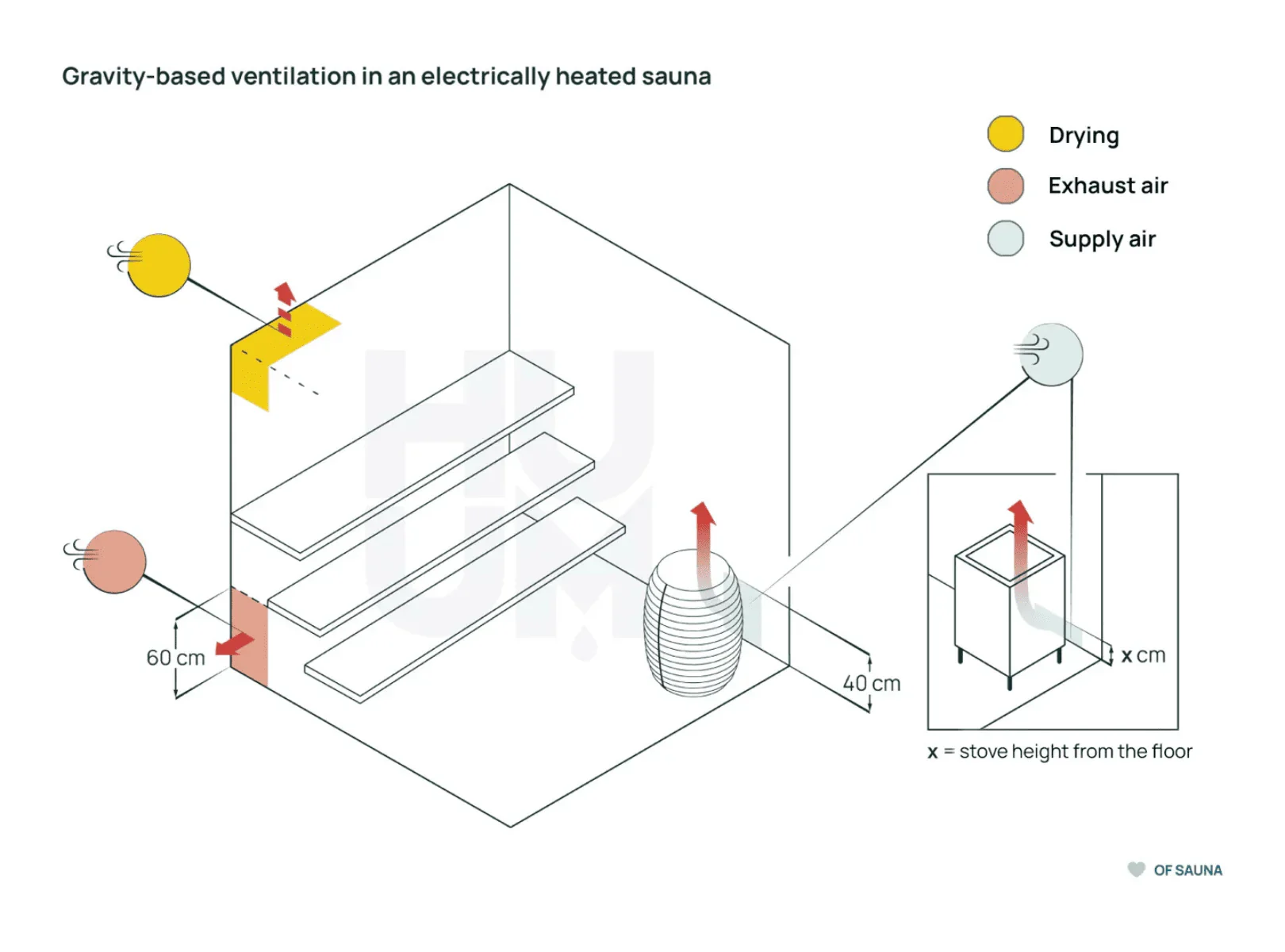
- Exhaust opening located between the first and second bench levels
- Ceiling exhaust vent used for drying the sauna after bathing
Drying the sauna after use
Ventilation plays a crucial role in drying the sauna once it has been used. Effective air circulation helps remove excess moisture, improves indoor air quality, and reduces the risk of mold and mildew. The drying exhaust is usually installed in the ceiling; however, it should remain closed during sauna use to maintain stable and even heat.
Ventilation systems explained
Saunas generally use one of two ventilation methods: gravity-based or mechanical ventilation. Gravity-based systems are most common in private homes and apartments, while mechanical ventilation is typically found in commercial saunas with high visitor turnover. Ventilation requirements also depend on the type of heater, electric or wood-fired, and whether the stove has an open mesh (net-stove) or closed sides.
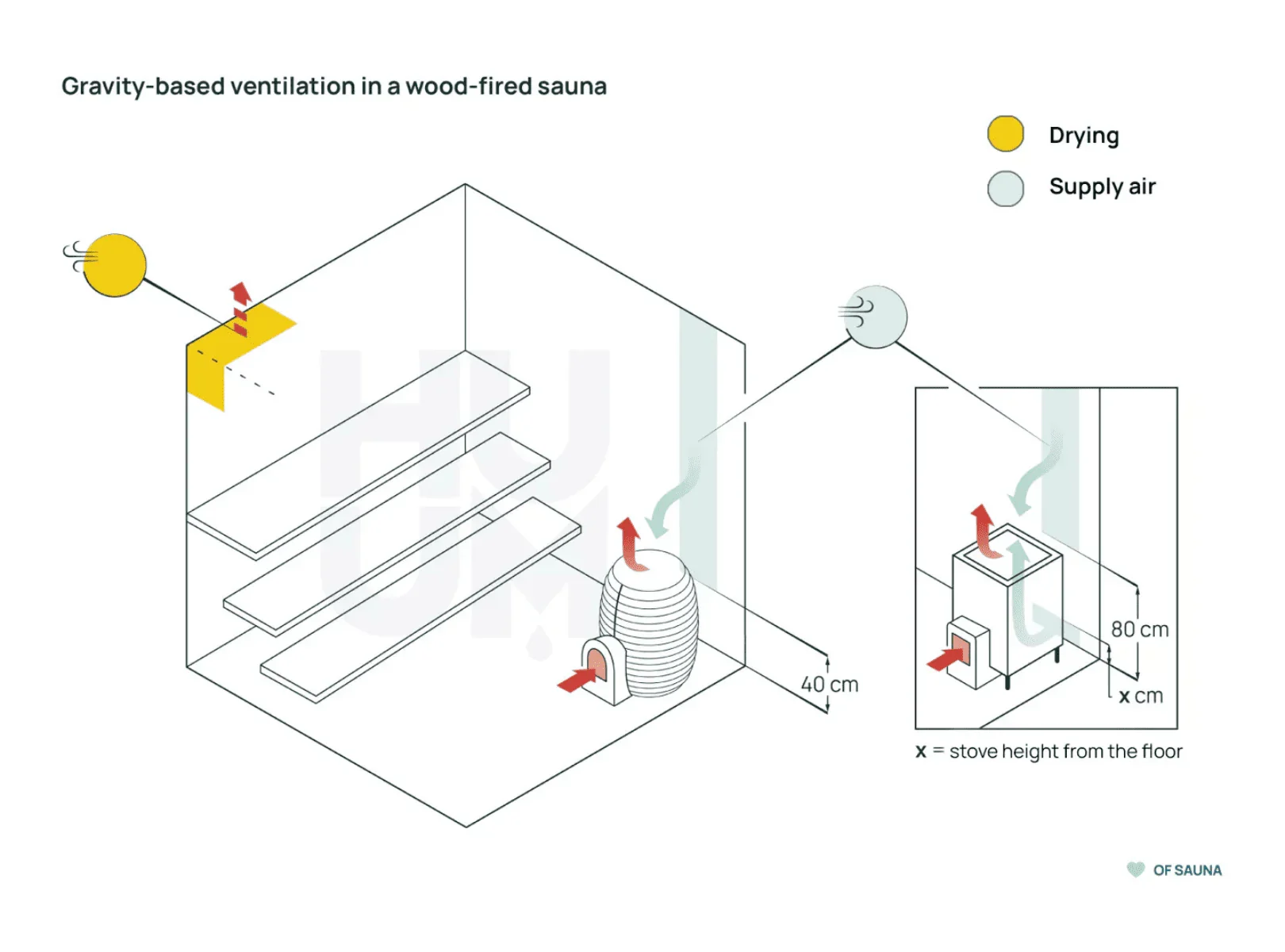
Gravity-based ventilation guidelines
For electric heaters or wood-fired stoves heated through the wall:
Closed-sided stove:
The fresh air intake should be installed close to the floor, allowing cooler air to enter from below, warm up near the heater, and circulate naturally. Alternatively, the intake may be placed above the stove, but no lower than 80 cm from the floor.
Net-stove:
The air intake should be positioned roughly at the midpoint of the stove, but not higher than 40 cm from the floor.
For both stove types, the exhaust vent should be installed on the opposite wall, at least 20 cm higher than the air intake, but no more than 60 cm above floor level.
For wood-fired stoves heated from inside the sauna
Closed-sided stove:
The fresh air intake should be installed in the lower air circulation zone. It is essential that the intake is positioned on the opposite side of the stove from the firebox door; otherwise, the incoming air will flow directly out of the sauna without creating proper air circulation. Alternatively, the supply air opening can be installed directly above the stove.
Net-stove:
The supply air intake should be positioned at the mid-height of the stove or higher, but no lower than 40 cm above the floor level.
With this type of wood-fired stove, a separate exhaust vent is not necessary, as the stove itself functions as a natural exhaust, effectively removing excess air and moisture from the sauna space.
Mechanical Ventilation
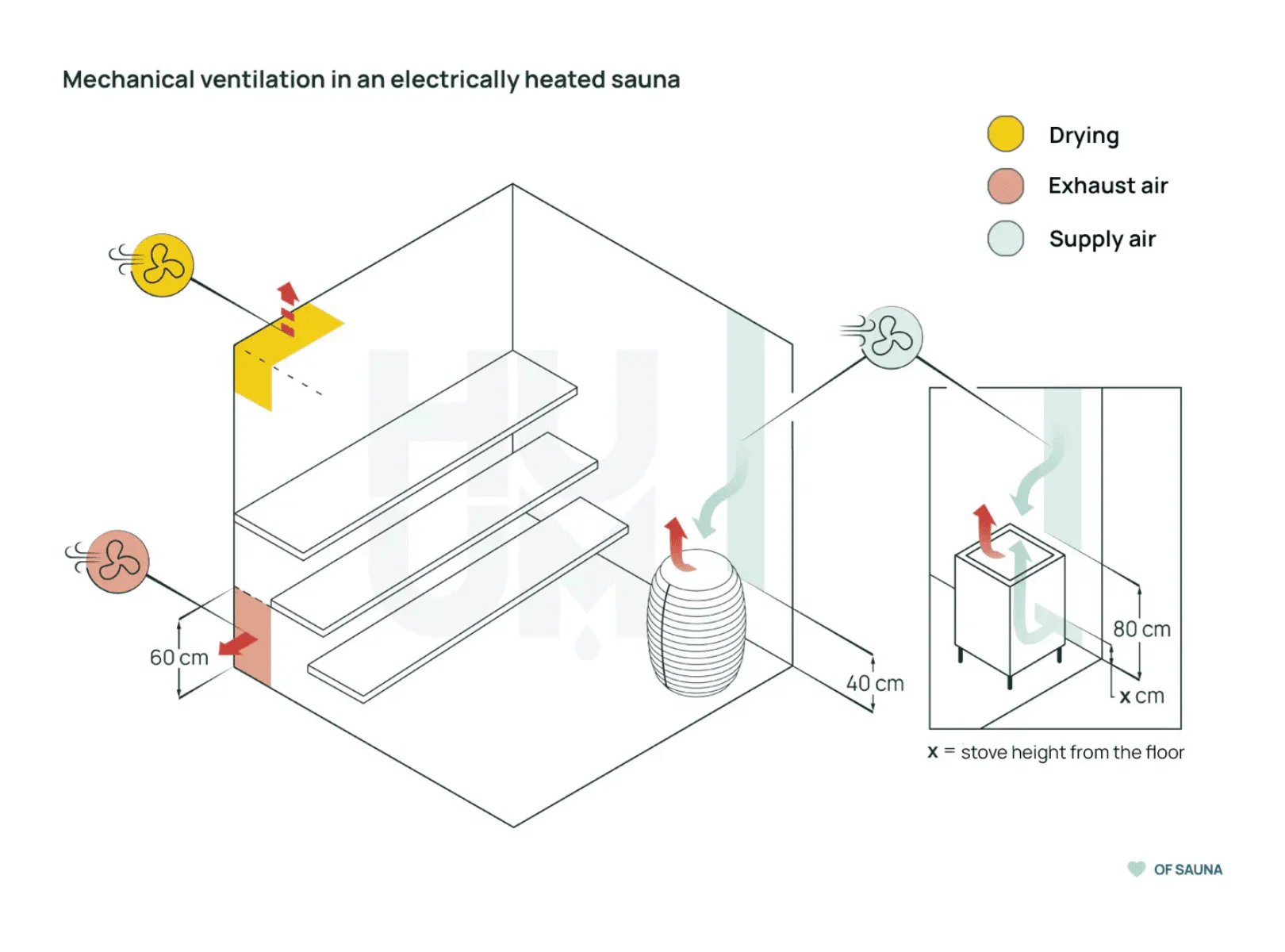
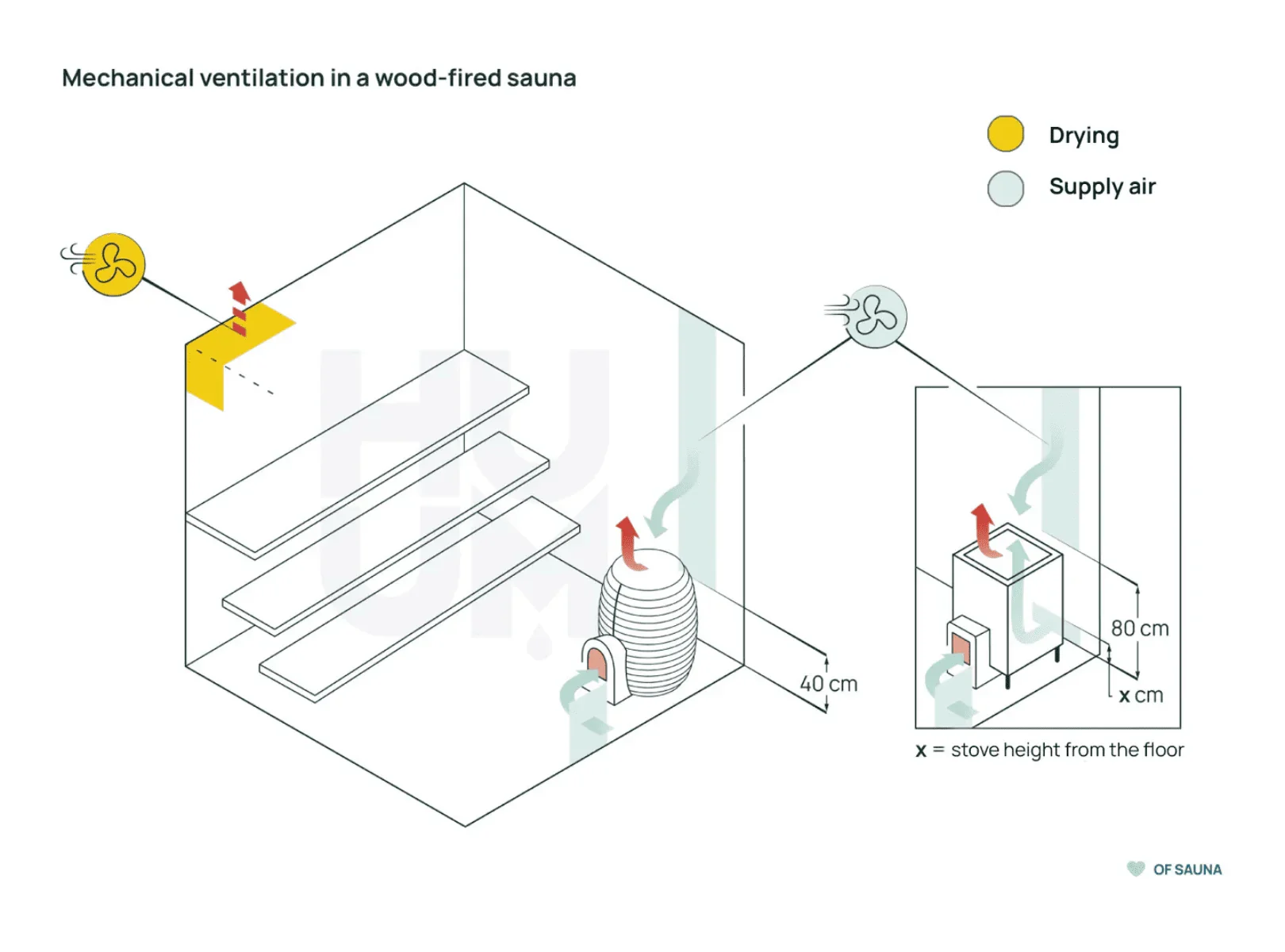
Important notice: When designing, installing, or adjusting a mechanical ventilation system, it is strongly recommended to consult a qualified specialist. Incorrect installation or improper maintenance, especially in combination with a wood-fired heater, can create negative air pressure and lead to dangerous carbon monoxide (CO) accumulation.
Mechanical ventilation systems can be implemented in various configurations; however, it is essential that the sauna ventilation operates in harmony with the building’s overall ventilation system to ensure safe and efficient airflow.
Conclusion
Well-designed ventilation is an essential element of any high-quality sauna, providing clean airflow, balanced temperatures, and a truly comfortable environment. Whether the sauna relies on natural (gravity-based) or mechanical ventilation, careful planning of air movement is key to achieving optimal performance and enjoyment. Allow your sauna to breathe and fully immerse yourself in a revitalizing, deeply relaxing sauna experience.
Source: huum.eu | Love of sauna