 English
 French
 German
 Lithuanian
 Polish
 Spanish
Building your own sauna is a rewarding project that brings the luxury of heat therapy and relaxation right to your home. Whether you’re looking to create a traditional Finnish steam room in your basement or a standalone structure in your backyard, a custom-built sauna offers personalized wellness benefits at a fraction of commercial spa costs. This comprehensive guide walks you through every step of sauna construction—from initial planning to final touches—ensuring you create a safe, efficient, and enjoyable retreat.
By the end of this guide, you’ll understand how to select appropriate materials, prepare the site, construct the framework, install proper insulation and ventilation, choose and mount a heater, build comfortable benches, and maintain your finished sauna. Both beginners and experienced DIYers will find actionable advice for creating indoor and outdoor saunas that meet safety standards while delivering authentic sauna experiences.
Planning your home sauna project
Before picking up any tools, thoughtful planning lays the foundation for a successful sauna build. Your first decisions will significantly impact the project’s scope, cost, and timeline.
Begin by determining whether you want an indoor or outdoor sauna. Indoor saunas integrate into existing structures, utilizing household utilities and available space—commonly in basements, bathrooms, or converted closets. Outdoor saunas require more extensive construction but offer standalone charm and often accommodate larger designs. Consider your climate, available space, and local regulations when making this choice.
Size matters significantly in sauna construction. A comfortable personal sauna might be as small as 4×4 feet, while family-sized options typically range from 6×8 to 8×12 feet. Allow approximately 2 feet of bench space per user and ceiling heights of at least 7 feet (with the top bench positioned 3-4 feet below the ceiling for optimal heat stratification).
Research local building codes and permit requirements before proceeding. Most municipalities require permits for new structures, electrical work, and sometimes plumbing modifications. Outdoor saunas may face zoning restrictions regarding setbacks from property lines or environmental considerations.
Budget realistically by calculating costs for materials, tools, utilities, and permits. DIY sauna builds typically range from $2,000 for basic indoor conversions to $8,000+ for elaborate outdoor structures. Creating a detailed materials list and obtaining multiple quotes will help refine your budget.
Deciding between indoor and outdoor saunas
Indoor saunas offer convenience, protection from weather, and lower construction costs since they utilize existing walls and utilities. They’re ideal for frequent use and homes in harsh climates. However, they consume living space, require careful moisture management to protect your home, and may face size limitations.
Outdoor saunas provide authentic experiences with more design freedom, dedicated space, and natural surroundings.
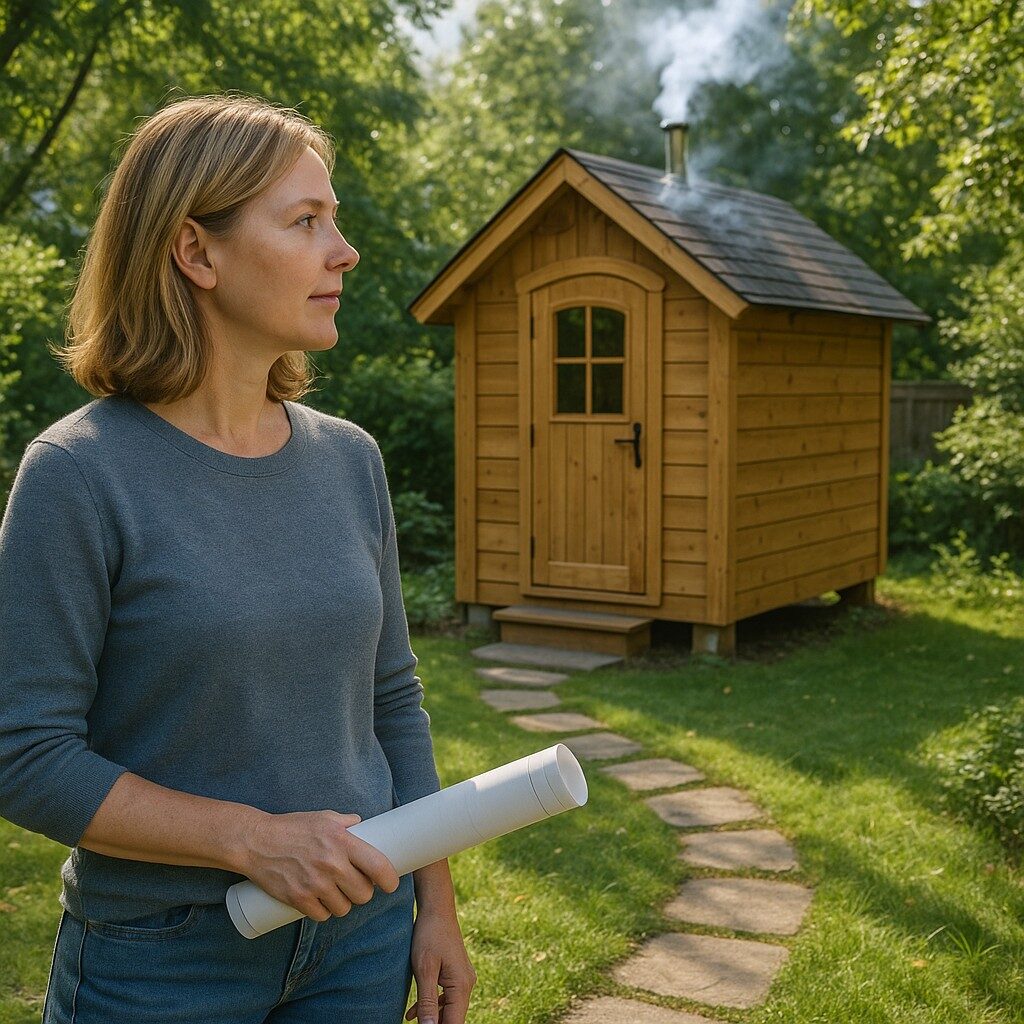
They eliminate home moisture concerns and often accommodate larger groups. The drawbacks include higher construction costs, utility extension requirements, reduced spontaneous use during inclement weather, and potential zoning hurdles.
Determining the right sauna size for your needs
When planning dimensions, consider both immediate and future needs. While a cozy 4×4-foot space works for solo relaxation, it quickly becomes cramped with multiple users. Standard family saunas measure approximately 6×8 feet, comfortably seating 3-4 people.
Height considerations are equally important. The ceiling should be at least 7 feet tall, with the top bench positioned 3-4 feet below to ensure proper heat distribution (since heat rises). Lower benches should be positioned 18-24 inches from the floor, with approximately 18-24 inches between bench levels for comfortable seating.
Plan for about 2 feet of bench space per person and ensure adequate foot room between opposing benches. Remember to account for heater clearances—typically 5-12 inches from walls and benches depending on the model and local codes.
Choosing the right materials and tools
Selecting appropriate materials significantly impacts your sauna’s performance, longevity, and the overall experience it provides.

For sauna interiors, thermally modified wood (thermowood) is among the best materials available, especially in high-heat, high-humidity environments.
Thermowood is a top performer for several reasons:
- It resists decay, warping, and swelling due to its heat-treated cellular structure.
- Remains cool to the touch, enhancing user comfort.
- Has a smooth, splinter-resistant surface, ideal for benches and walls.
- Does not release resin, unlike untreated softwoods.
- Offers a pleasant, subtle aroma when heated, depending on the species used (often spruce or pine that’s been thermally modified).
- Boasts a long lifespan in humid, hot conditions typical of saunas.
Compared to untreated wood species like hemlock, poplar, or basswood, thermowood offers superior dimensional stability and resistance to microbial damage, although it may come at a slightly higher cost.
Wood Selection Guidelines for Sauna Interiors
Interior paneling: Use kiln-dried, clear (knot-free) tongue-and-groove thermowood boards, ideally ⅝-inch thick. This profile minimizes visible gaps and allows for natural movement.
Benches and backrests: Choose thermowood in 1×4 or 2×4 dimensions for strength, comfort, and a uniform look.
Additional Materials (Beyond Interior Surfaces)
- Framing lumber:
Use pressure-treated wood for foundations and exterior walls.
Use standard dimensional lumber for interior framing (protected by vapor barrier).
- Insulation:
Rigid foam or mineral wool: Minimum R-13 for walls, R-22+ for ceilings.
- Vapor barrier:
Specialized aluminum foil vapor barrier (rated for sauna heat)
Foil tape to seal all seams completely.
- Exterior siding & roofing:
Use durable materials for outdoor saunas (e.g., Thermo cladding, asphalt shingles, or metal roofing)
- Windows & doors:
Tempered glass only (to prevent shattering from thermal stress)
- Fasteners:
Use stainless steel screws and hardware to prevent corrosion.
Essential Tools for Sauna Construction
- Basic woodworking tools:
Circular saw, drill/driver, level, framing square
- Specialty tools:
Brad nailer (for installing tongue-and-groove boards)
Concrete mixer, post-hole digger (for foundation work – can be rented)
- Safety equipment:
Respirator, gloves, eye protection, hearing protection
Preparing the site and foundation
Proper site preparation ensures your sauna remains level, stable, and protected from moisture—critical factors whether building indoors or outside.

Begin by evaluating soil conditions, drainage patterns, and access to utilities if creating an outdoor structure.
For indoor saunas, inspect existing floors for load capacity and moisture issues. Basement concrete slabs provide excellent support but may require vapor barriers and insulation. Upper-story installations demand structural evaluation to confirm floor joists can support the concentrated weight of heaters, benches, and users.
Outdoor sauna sites require clearing vegetation, removing topsoil, and establishing proper drainage away from the structure. Ideal locations offer some wind protection, convenient access from your home, privacy from neighbors, and appropriate distance from property lines to comply with local codes.
Foundation options vary based on site conditions and project scope:
Comparing foundation types (slab, pier, plinth, screw)
Concrete slab foundations provide the most substantial, permanent base for outdoor saunas. After excavating 8-12 inches of soil, install a 4-inch gravel base for drainage, add rigid foam insulation, place wire mesh reinforcement, and pour a 4-inch concrete pad. Include slight slopes for drainage and consider embedding heating elements for cold climates. While durable and rodent-proof, slabs require significant excavation, formwork, and typically professional assistance.
Pier foundations use concrete columns to support a wooden subfloor, elevating the structure off the ground. Dig holes below the frost line (typically 36-48 inches in northern climates), fill with concrete, and set anchor bolts for attaching support beams. Piers minimize site disruption and work well on sloped terrain but leave space underneath that requires skirting for appearance and to prevent animal nesting.
Plinth foundations consist of precast concrete blocks placed on compacted gravel bases, supporting a wooden substructure. This affordable, DIY-friendly approach requires minimal tools and site preparation. However, plinths may shift seasonally in freeze-thaw conditions and provide less stability than poured foundations.
Screw pile foundations use helical metal shafts driven into the ground, supporting brackets that attach to floor joists. These foundations offer minimal site disturbance, quick installation, adjustability, and excellent stability. While more expensive than plinths, their combination of performance and installation ease makes them increasingly popular for moderate-sized outdoor saunas.
Framing and constructing the sauna structure
Once your foundation is prepared, framing creates the skeleton of your sauna. For indoor conversions, you’ll typically build a simple stud wall system within existing rooms. Outdoor saunas require complete structural framing, including walls, floor, and roof.
Begin with pressure-treated bottom plates (sill plates) secured to your foundation using appropriate fasteners—concrete anchors for slabs, lag bolts for wooden subfloors. Standard 2×4 framing spaced 16 inches on center works well for most sauna walls, though 2×6 framing provides extra insulation space in severe climates.
When designing the frame, account for door openings (typically 24-36 inches wide), window placement for outdoor models, and optimal bench arrangements. Include blocking between studs where you’ll mount benches and heaters for proper support. For ceiling heights, allow at least 7 feet, with higher ceilings offering better heat stratification.
Floor framing for outdoor saunas typically uses 2×6 or 2×8 joists spaced 16 inches apart, covered with ¾-inch exterior-grade plywood. Indoor saunas may utilize existing floors with additional moisture protection.
Roof structures for outdoor saunas can be simple shed styles (sloped in one direction) or more complex gabled designs. Include adequate overhang (12-24 inches) to protect walls from weather exposure. Proper roof ventilation prevents condensation buildup in the attic space.
For exterior finishing on outdoor saunas, install house wrap over the sheathing before adding siding to prevent moisture intrusion. Select siding materials appropriate for your climate—cedar shingles, fiber cement boards, or metal panels all perform well with proper installation. Consider traditional treatments like Japanese Shou Sugi Ban (charred wood) for distinctive, naturally weather-resistant exteriors.
Indoor sauna exteriors should match surrounding finishes for aesthetic continuity. Standard drywall works for adjacent walls, though cement board offers better moisture resistance in humid environments like bathrooms.
Installing insulation, vapor barriers, and ventilation
Proper thermal management transforms a simple wood enclosure into an efficient sauna. The insulation-vapor barrier-ventilation trinity works together to control heat, manage moisture, and ensure air quality.
Begin insulation after completing electrical rough-ins but before installing the vapor barrier. For walls, use mineral wool or rigid foam insulation rated minimum R-13 (R-19 for exterior walls in cold climates). Ceiling insulation should be R-22 or higher, as heat rises and escapes primarily through the top of the structure. Floor insulation is essential for outdoor saunas and indoor installations over unheated spaces, with rigid foam providing both thermal barriers and moisture protection.
After insulation, install a continuous, uninterrupted aluminum foil vapor barrier on all interior surfaces—walls, ceiling, and floors. Standard plastic sheeting will deteriorate in high temperatures; only use foil-faced products specifically rated for sauna use. Overlap seams by 4-6 inches and seal thoroughly with foil tape. Pay special attention to corners, electrical penetrations, and joints where walls meet floors and ceilings. The vapor barrier serves dual purposes: reflecting heat back into the room while preventing moisture migration into wall cavities.
Ventilation creates comfortable conditions and extends the structure’s lifespan. The simplest effective system places an adjustable inlet vent low on the wall near the heater and an outlet vent on the opposite wall near the ceiling. This creates natural convection circulation without fans or moving parts. Size vents based on room volume—approximately 4-6 square inches of vent area per person the sauna accommodates.
For electric heater installations, additional floor-level vents may be required according to manufacturer specifications. Wood-burning stoves need dedicated combustion air supplies separate from room ventilation. In all cases, vents should include adjustable covers to regulate airflow based on season and preference.
Properly integrated, these systems create the ideal sauna environment: quick heating, even temperature distribution, appropriate humidity levels, and fresh air circulation—all while protecting the structure from moisture damage.
Selecting and installing a sauna heater
The heater is the heart of your sauna, determining heating capacity, style of experience, and ongoing operational requirements. Three primary options dominate the market, each with distinct characteristics.
Electric sauna heaters offer convenience and consistent performance. Size requirements follow a simple formula: approximately 1 kW of heating power per 45-50 cubic feet of sauna space (after accounting for insulation quality). Most residential saunas require 4.5-9 kW heaters, which typically need 220-240V electrical service. Installation involves mounting the unit according to manufacturer-specified clearances from combustible materials (generally 5-12 inches), connecting appropriate gauge wiring through a dedicated circuit, and installing the required control panel. Benefits include push-button operation, programmable features, and consistent heat. Drawbacks include higher electricity costs and less authentic heat characteristics than wood-burning options.
Wood-burning sauna stoves provide traditional experiences with radiant heat, pleasant aromas, and independence from electrical service. Size selection depends on sauna volume and desired heating time, with most residential saunas using stoves rated 68,000-120,000 BTU. Installation requires constructing a non-combustible base (concrete board over cement backer), installing heat shields on nearby walls, and creating proper chimney systems with appropriate clearances through walls or ceilings. These stoves deliver authentic Finnish sauna experiences and lower operating costs in areas with access to affordable firewood. However, they demand more attention during operation, longer heat-up times, and regular ash removal.
Infrared heating systems use radiant panels mounted on walls or ceilings to warm the body directly rather than heating the air. These systems require standard 110V electrical service, simple mounting procedures, and minimal clearances. Benefits include quick start-up, lower operating temperatures (120-140°F versus 160-190°F in traditional saunas), and reduced energy consumption. Many purists don’t consider infrared systems “true saunas,” but they offer therapeutic benefits with simpler installation requirements.
Safety considerations apply to all heater types: follow manufacturer clearance specifications exactly, install protective barriers around heaters to prevent accidental contact, use appropriate fire-rated materials for nearby surfaces, and ensure electrical installations meet local codes. For electric heaters, GFCI protection and moisture-resistant connections are essential safety features.
Interior bench, door, lighting, and finishing touches
With the structure complete and mechanical systems installed, focus shifts to the elements that define the sauna experience: comfortable seating, appropriate access, proper lighting, and finishing details.
Bench construction balances comfort, durability, and proper heat exposure.
The traditional multi-level bench arrangement places the top bench 18-24 inches below the ceiling, with lower benches stepping down toward the floor. This configuration takes advantage of heat stratification, giving users temperature options. For comfort, benches should be 18-24 inches deep with 3-4 inches of space between slats for air circulation.
Construct bench frames using 2×4 lumber, creating sturdy supports every 16-24 inches. For the seating surface, use 1×4 or 2×4 clear-grade cedar or other sauna-appropriate wood, slightly rounding all edges and corners for comfort and safety. Leave ¼-inch gaps between boards to allow air circulation and drainage. Install removable bench sections where possible to facilitate cleaning underneath. Backrests angled at 15-20 degrees significantly enhance comfort during longer sessions.
Door selection impacts heat retention, safety, and aesthetics. Standard dimensions range from 24 inches wide for small saunas to 36 inches for accessibility compliance. All sauna doors must swing outward for safety, preventing occupants from becoming trapped if someone falls against the door inside. Wood doors with tempered glass panels provide the best combination of insulation and visibility, while full-glass doors offer contemporary aesthetics at the cost of some heat loss. Ensure proper sealing with weatherstripping and durable hinges rated for high-temperature environments.
Lighting should be subdued, indirect, and rated for high-temperature, high-humidity environments. Traditional options include wall-mounted, heat-resistant fixtures with amber bulbs providing warm illumination. Contemporary designs often incorporate low-voltage LED strips behind backrests or under benches, creating ambient glow without harsh direct light. All electrical components must be specifically rated for wet, high-temperature environments, with wiring protected by appropriate conduit.
Essential accessories include:
- thermometer and hygrometer mounted at seated eye level
- wooden bucket and ladle for water
- sauna stones arranged properly around heating elements
- wooden headrests and bench towels for comfort
- wall-mounted hourglass timer for tracking session length
Final interior finishing touches include installing trim around doors and windows, adding coat hooks outside the sauna room, and applying appropriate wood treatment. Rather than polyurethane or varnish, which can release chemicals when heated, use sauna-specific wood treatments like paraffin oil or specialized products designed for high-temperature applications.
Safety, maintenance, and running costs
Creating a safe, long-lasting sauna requires ongoing attention beyond the initial construction. Implementing proper safety protocols, establishing regular maintenance routines, and understanding operating costs ensures your wellness retreat remains enjoyable for years.
Safety begins with proper installation but extends to daily operation. Install carbon monoxide and smoke detectors near wood-burning saunas. Place visible warning signs indicating maximum temperatures, session duration recommendations, and contraindications for certain medical conditions. Keep a water bucket near wood-burning stoves for emergency dousing. Ensure all electrical components feature GFCI protection and weather-resistant coverings. Install tempered glass exclusively for windows and doors to prevent shattering from temperature fluctuations.
Regular maintenance preserves both function and appearance. After each use, leave the door open to allow complete drying, preventing mold growth. Weekly cleaning involves brushing benches with a stiff brush and occasionally scrubbing with mild soap and water. Monthly maintenance includes inspecting heaters, checking electrical connections, and examining wood surfaces for damage. Quarterly tasks involve deep cleaning walls and benches with approved sauna cleaners, inspecting vapor barriers for tears, and checking ventilation for obstructions. Annual maintenance should include examining the roof (outdoor saunas), testing safety devices, inspecting heater elements or stove components, and replacing sauna stones as needed.
Operating costs vary significantly based on sauna type, location, and usage patterns. Electric saunas typically cost $0.75-2.50 per hour to operate, depending on local electricity rates, heater size, and insulation quality. Wood-burning models consume 15-25 pounds of firewood per session, with costs varying by regional wood prices. Infrared systems offer the lowest operating expenses, typically $0.30-0.75 per hour.
Long-term maintenance costs include replacing heater elements every 3-7 years ($100-300), changing sauna stones every 1-2 years ($30-80), and occasional wood treatment application. Outdoor saunas require additional exterior maintenance, including re-staining or sealing every 2-3 years depending on climate exposure.
To maximize sauna lifespan while minimizing costs, implement these professional practices:
- heat the sauna only when planning to use it rather than maintaining constant temperature
- install a timer switch to prevent accidental extended operation
- maintain proper ventilation to reduce moisture-related deterioration
- schedule sessions back-to-back when possible to utilize already-generated heat
- perform preventative maintenance rather than waiting for component failure
With proper care, a well-built sauna will provide 15-25+ years of service, making your initial construction investment increasingly valuable over time.
Frequently asked questions (FAQ)
What is the best wood for building a sauna?
Thermo wood is widely preferred for its durability, antimicrobial properties, and pleasing scent, but spruce are affordable alternatives.
Do I need a permit to build a sauna at home?
Requirements vary, but outdoor and larger indoor saunas often require permits and inspections—always check with local authorities before starting.
How much does it cost to build a DIY sauna?
Costs range from $1,000 for very small/basic builds using secondhand materials to $10,000+ for large, custom indoor saunas. Kits are comparably priced.
How do I ventilate my sauna properly?
Add venting near the heater and a matching outlet on the opposite wall/ceiling to promote fresh air and safe operation.
What ongoing maintenance does a sauna require?
Regular cleaning, checking for wear/damage, inspecting the heater, and replacing stones as needed will keep your sauna safe and comfortable.